Gulliver's watch
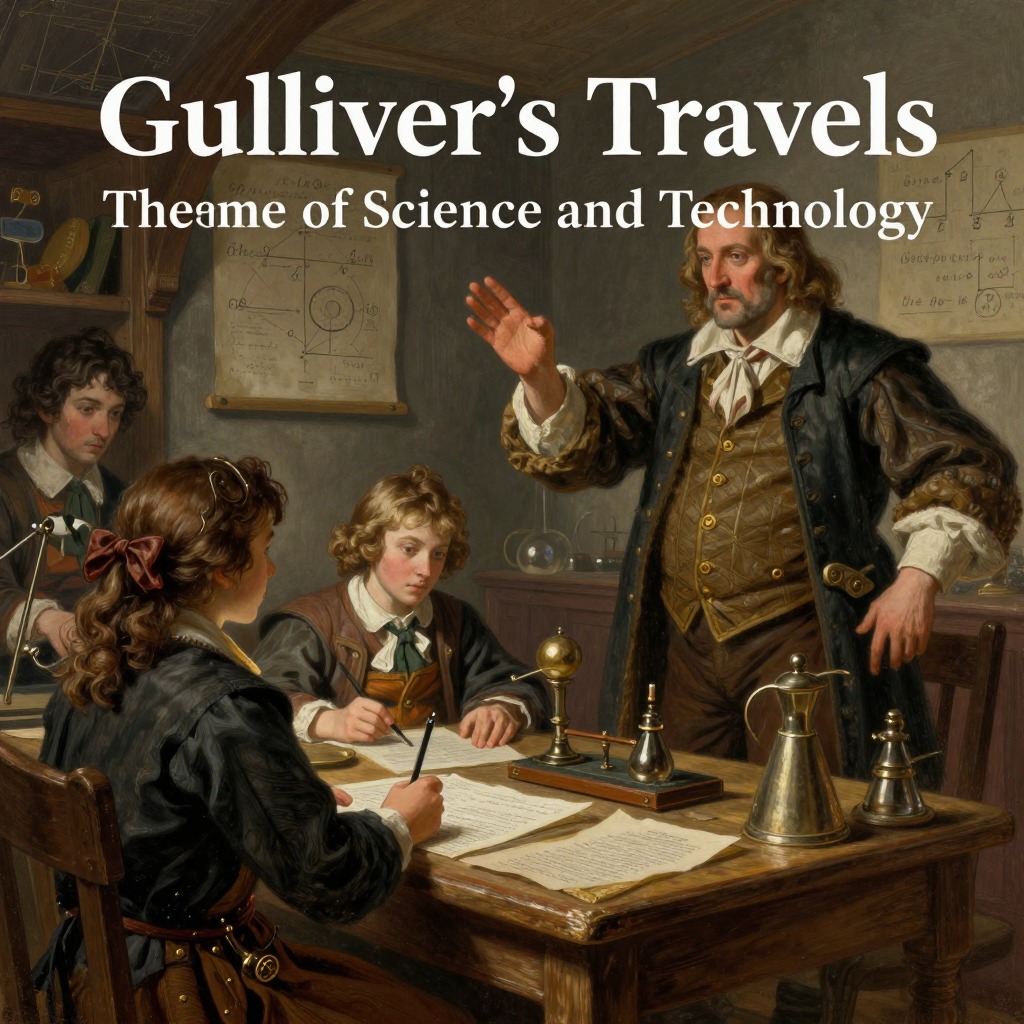
Gulliver's watch is a silver pocket watch that becomes a central object of wonder and misinterpretation during the Lilliputian search of his person. When the two officers appointed by the Emperor of Lilliput conduct an inventory of the contents of the Man-mountain's pockets, they discover a "great silver chain" hanging from his right fob, at the end of which is attached a "wonderful kind of engine." This object appears to them as a globe, half silver and half of some transparent metal, with strange figures circularly drawn on the transparent side. When they attempt to touch these figures, their fingers are stopped by the lucid substance. The officers put the engine to their ears and hear an incessant noise, like that of a water-mill. Unable to classify it, they conjecture that it is either some unknown animal or the god that Gulliver worships, leaning toward the latter because Gulliver assures them (though he expresses himself very imperfectly) that he seldom does anything without consulting it. He calls it his oracle and says it points out the time for every action of his life. This interpretation transforms a mundane European timepiece into a supernatural entity within the Lilliputian worldview, illustrating the radical cultural and perceptual gap between Gulliver and his captors.
The Emperor's Examination and the Watch as a Court Curiosity
After the inventory is read aloud, the emperor demands that Gulliver deliver up the several particulars. When Gulliver presents his watch, the emperor is very curious to see it and commands two of his tallest yeomen of the guards to bear it on a pole upon their shoulders, as draymen in England do a barrel of ale. The emperor is amazed at the continual noise the watch makes and the motion of the minute-hand, which he can easily discern because Lilliputian sight is much more acute than that of Europeans. He then asks the opinions of his learned men about the watch, and their answers are various and remote, though Gulliver cannot very perfectly understand them. The watch is thus physically and symbolically elevated from a personal accessory to a public spectacle, a court curiosity that provokes both wonder and incomprehension. Its function as a timekeeper is entirely lost on the Lilliputians, who instead read it through the lens of their own cultural and religious categories.
The Watch's Role in the Narrative of Power and Perception
The watch episode is part of a larger pattern in which Gulliver's European possessions—his scimitar, pistols, spectacles, and comb—are each subjected to Lilliputian scrutiny and reinterpretation. The watch, however, stands out because it is not a weapon and poses no physical threat, yet it generates the most elaborate and fantastical explanation. The Lilliputian officers' report, which Gulliver later translates into English, treats the watch as a quasi-religious artifact, an "oracle" that governs his life. This misreading underscores Swift's satire of European pretensions to rationality and scientific progress: the very instrument that symbolizes European precision and order becomes, in a different scale of perception, a source of superstitious awe. The watch also serves as a marker of Gulliver's own cultural identity and his inability to fully communicate its meaning, highlighting the theme of relativity that runs through the entire voyage to Lilliput. Ultimately, the watch is returned to Gulliver along with his other goods, but its brief career as a court marvel encapsulates the comedy and critique of cross-cultural misunderstanding that defines the first part of the Travels.